

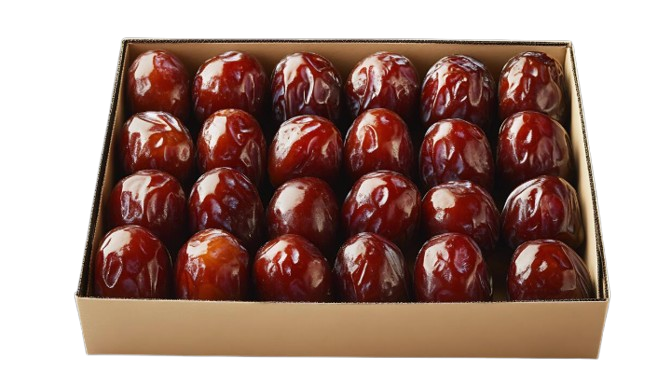
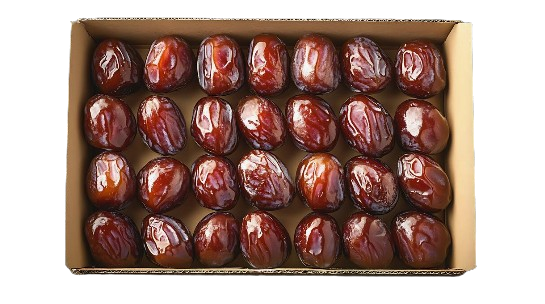


mazafati dates
Mazafati dates (also known as Mozafati dates, Bam dates, or rotab Mozafati) are one of the highest-quality and most popular date varieties in Iran and internationally. Their primary origin is Iran’s Kerman province, especially the city of Bam, where unique climatic conditions—hot days, cool nights, fertile soil, and traditional qanat irrigation—produce the finest specimens. They are also cultivated in other southern Iranian regions (such as Jiroft, Kahnuj, and parts of Sistan-Baluchestan) and limited areas of Pakistan’s Balochistan province, though the premium commercial variety is overwhelmingly associated with Iran.
Physical and Sensory Characteristics
- Shape and size — Oval, medium to large (length 2.5 to 4.5 cm).
- Color — Dark brown to glossy black (fresh rotab stage features an attractive shiny black hue).
- Skin — Thin, smooth, glossy, and easily separates from the flesh.
- Texture — Soft, fleshy, juicy, and syrupy (high moisture content, typically 15–35%, varying by harvest time and location; commonly 20–25% for fresh consumption).
- Flavor — Intensely sweet with mild caramel notes, reminiscent of honey or soft chocolate, and a melt-in-the-mouth consistency.
These traits make Mazafati dates ideal for fresh consumption (as rotab) rather than drying, unlike many other varieties.
Mazafati dates are a nutrient-dense fresh date variety with high moisture content. Nutritional values vary slightly by harvest conditions, ripeness, and source, but consistent data across commercial and exporter analyses show:
- Calories: 275–300 kcal
- Carbohydrates: 75–80g (primarily natural sugars: fructose, glucose, and minimal sucrose)
- Dietary Fiber: 6.5–7g
- Protein: 2.2–2.8g
- Fat: Less than 0.5g (virtually fat-free)
- Key Minerals:
- Potassium: 625–750 mg (exceeds that of bananas, supporting ~15–20% of daily needs)
- Iron: 1.2–2.7 mg
- Magnesium: 45–55 mg
- Vitamins: Rich in B-complex (e.g., B6: 0.15–0.25 mg, niacin, thiamine, riboflavin); modest vitamin C (2–4 mg) and vitamin A precursors
- Antioxidants: 25–35 mg phenolic compounds, including flavonoids and anthocyanins


